Showing posts with label Mobile. Show all posts

Dec 25, 2011

Intel's Medfield: Android concept Mobile & Tab is awesome

its seems like Intel finally now woke up and started to enter to the smartphone’s world with Medfield CPU.

and we are hoping that intel will bring his new mobile model in first half 2012 in CES. now here’s some main features of the intel’s Concept Model:
1-larger screen than iPad2 & enough lighter than iPhone 4S because of his plastic body.
2-Intel promised that this mobile will be faster in its range, with more power consumption.
3-can play B-Ray HD video & stream it to a LCD through Wi-Fi.
4-can take 10 snaps with its 8MP cam in burst mod in 15 snaps per second.
Intel doesn't have best record of giving power friendly mobile cpus, now has developing new phone and tab with his new Medfield CPU.
now we are hoping that intel will dominate smartphone market same as in personal computers market over the AMD and will satisfy their customers like his next gen core i series.

Dec 17, 2011

Microsoft buy Nokia - 3 reasons wont & 3 reasons it might

here is 3 reasons Microsoft won't buy Nokia:

1- Microsoft gains nothing in the deal
The simplest reason Microsoft won't buy Nokia is this: Microsoft gets nothing out of the deal. Microsoft already has what it wants out of Nokia -- that the world's largest phone manufacturer settle on Windows Phone 7 as its smartphone operating system. Why spend billions for something you've already got?

2- Microsoft would be buying businesses it has no interest in
Nokia makes a lot more than just smartphones, notably inexpensive, low-end phones. That's a business Microsoft has absolutely no interest in, and would gain nothing from owning. Why buy something that would just be a drag on your business and offer no strategic value?

3- Combining corporate cultures could be nightmarish
Whenever one company buys another, there's inevitable conflict as the two firms try to merge corporate cultures and business practices. Microsoft is at a crossroads right now, facing multiple challenges, most notably in mobile, Internet search, and the cloud. The last thing it needs is that type of distraction.
Now here is 3 reasons Microsoft may take the plunge and buy Nokia:
1- Patents, patents, patents
As Microsoft knows better than any company, patents have become powerful assets. Microsoft has sued or threatened to sue makers of Android cell phones based on what it claims are patent infringements, and has gotten hundreds of millions of dollars in returns. Adding Nokia's considerable number of patents on mobile phones would make Microsoft even more formidable.
2- Nokia could be bought relatively cheaply
Paulo Santos of the Seeking Alpha investing Web site claims that because of Nokia's market woes, Microsoft could buy Nokia relatively cheaply. He figures that even paying a 50% premium, Microsoft would pay $21 billion. Given that Nokia is sitting on what Santos says is $6.6 billion in cash, and that Microsoft would likely sell off Nokia's telecom equipment division, that's not an outrageous amount for what Microsoft would get. Consider that Google is buying the smaller Motorola Mobility for $12.5 billion, Microsoft could almost be considered as getting a good deal.
3- Microsoft needs to follow Apple's and Google's lead
With Google buying Motorola, Microsoft will be the only major maker of smartphone operating systems that doesn't also manufacture hardware. Apple, RIM, and now Google all make phone hardware as well as smartphone operating systems. As Apple has long shown, if you make the hardware and the software, you can design the best possible user experience. So in buying Nokia, Microsoft would be more likely to do the same.

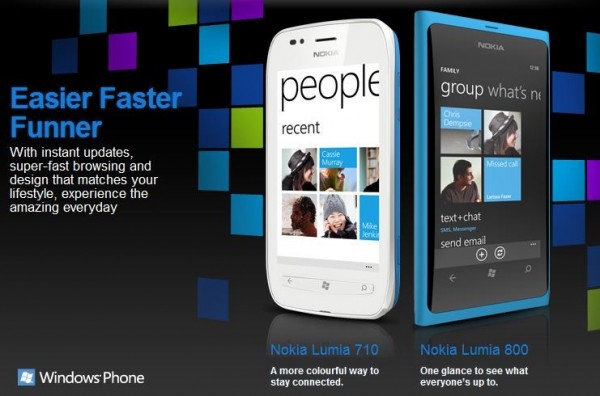
Can Nokia survive with Lumia Series?

Innovation and agility at both ends of the handset market: does this signal that Nokia is getting its act back together? Or do the achievements pale against the goings on in Apple, Samsung and local manufacturers in emerging economies?

For a moment, ignore Lumias' specifications (they don't read half bad). Don't compare them with other Windows Mango devices. Consider what it means for the company. From idea to the store shelf - the Lumia journey is a quick turnaround from handset industry standards. Benchmark it to the old Nokia, it looks like a sprint.

But the real mad dash was the slew of dual SIM phones. More than two years late into India and other emerging economies, the company has announced seven such phones since June. And though late, Nokia came good. It loaded the dual SIM phones with features: Ovi services and specific innovations. The result: it shipped over 18 million such phones since their launch.
Elop is already gushing. In a media interaction in September he claimed that the success of dual SIM phones had a "halo effect on our single-SIM phones. India has shown that brand plus team plus great execution can deliver strong results".
Nokia, which uses Symbian in its high-end smartphones, has struggled to make headway against Apple's iPhone and Android-powered phones in this highly lucrative segment. Earlier this year its CEO, Stephen Elop, described Symbian as burning platform and decided to join hands with Microsoft for the company's software needs.
Lumia 800, a handset that the firm is currently shipping to retailers in India, is Nokia's first smartphone running on Microsoft's Windows Phone operating system. Microsoft too is struggling against iPhone and Android but hopes with the reach and channel of companies like Nokia it will be able to improve the situation by the end of 2012.
ccording to IDC, Android saw a growth of 90% over the previous quarter. Apple iOS consolidated further, with a 3.09% share of the smartphone market, compared to 2.6% in Q2 2011. IDC said that overall Indian mobile phone market grew by 12% in units shipped, over the previous quarter, to clock 47.07 million units. Year-on-year, there was a shipment growth of 13.8%.

BlackBerry App World 3.1 released with gifting option

Research In Motion (RIM) reeled out BlackBerry App World v3.1. The upgraded application market brings along a variety of new features like the ‘Request Gift’ functionality and comes incorporated with an industry standard content rating system.

For those feeling generous this festive season, the new ‘Request Gift’ feature should be apt as it lets them send a gift request to any one of their BBM contacts so that the particular friend has a better knowledge of what to buy. For added convenience in purchasing gifts, this refreshed version of the App World provides users with multiple payment methods. Purchases can be made via the PayPal account, credit card or directly through the wireless bill.

The integrated content rating system enables users to restrict certain things for various age groups. According to the official BlackBerry blog, this system is especially useful for parents who don’t want their children to access some content that may be of a mature nature.

Nexus S & HTC gets 4.0 Ice Cream update

Coming as a festive present for owners of the Samsung Google Nexus S is the Android 4.0 Ice Cream Sandwich update. Engadget states that this upgrade is only going to be valid for those Nexus S devices running on networks that are GSM and UMTS compatible.
Those who can’t wait for Android 4.0 on a CDMA smartphone can now buy one as Verizon’s Galaxy Nexus with LTE support launched this week. The handset costs $299 with a two-year contract or $649 without. Various reviews have mostly mirrored my own experience with the unlocked GSM Galaxy Nexus I’ve been using for a few weeks, although there are some slight differences.


“We’re rolling out Android 4.0, Ice Cream Sandwich, to GSM/UMTS Nexus S devices over the coming month, starting today. Enjoy the tasty update! Once you get the update, check out some tips and shortcuts for getting started at the Android 4.0 Help Center,” cited the official Google+ Android page.

The HTC Sensation, HTC Sensation XL and HTC Sensation XE are the smartphones that will be receiving the Ice Cream Sandwich upgrade. Also to be updated are the HTC Rezound, HTC EVO 3D, HTC EVO Design 4G and HTC Amaze 4G in the U.S. Released just last month, the latest version of the Google mobile OS brings along a host of unique functionalities such as Face Unlock, the NFC powered Android Beam and the People app.

Dec 15, 2011

is that paying through NFC is safe?

NFC wireless technology is considered a "complement to Bluetooth," reported Threatpost, and it has been "built into mobile phones and a wide range of wireless smart tags, akin to RFID tags, that can store a wide range of information and interact wirelessly with NFC-enabled phones. Applications for NFC technology include mobile payments, in which phone users could transmit credit card or banking information wirelessly from their phone to a check out device, as well as ticketing. So-called 'smart posters' have already been deployed in some cities and contain smart tags with direction and even information that can be wirelessly transmitted when NFC phones are brought in proximity to the phone."

How to protect yourself:
With the rising concern over mobile security, we asked Lookout CTO and co-founder Kevin Mahaffey what consumers can do to protect themselves.

“Consumers can protect themselves by being cautious when clicking links within emails, SMS or social networking sites that ask for personal information,” he says. “We also recommend that user’s download a security app and always take time to read the reviews before downloading any new applications. Make sure they read the permissions to make sure they make sense!”

These are things to look out for, and through their report Lookout highlights the different things that the consumer can do to keep their information safe. Each of theses has a varying level of danger because they can be packaged with legitimate apps or channels that people trust, so it does create an issue because the average consumer wont know which is safe and which is not.

Aug 30, 2009

5 Million Samsung Stars Sold After it went on sale in May

Looks like the Koreans are having a ball this year. Just days after the news of LG Arena is selling over a million units surfaced, here's some more. Samsung now reports that it has sold just over 5 million units of its mid range device, the Star 5230, since it went on sale the previous quarter.
In this scenario, Samsung's target of selling over 10 million Samsung Stars seems right on track! The Star 5230 is also known as the Tocco Lite in some markets. It went on sale in May and was an instant hit, as made obvious by the sales figures. Back then, it offered a nice combination of features and price and the "privilege" of owning a touchscreen handset, without actually creating a hole in your wallet. As for the sales figures, in the first month, about 7,00,000 units were sold. June saw Samsung shipping 9,00,000 of them, while July and August brought sales of 1.6 million and 1.8 million units respectively.
The Start 5230 offers users a WQVGA display, DNSe, a 3 megapixel camera and a lot of other multimedia features in a slim form factor. (story Link)

Aug 25, 2009

A hands-on review of the HTC Hero

A couple of months ago HTC announced a new handset called the Hero. Even though it was powered by Android, it was much different than other Android-powered phones such as the G1 and the HTC Magic in the sense that it wasn't Google-branded and also brought along a new user-experience dubbed as the HTC Sense UI.

Looking at the preview of this beauty, I was much appealed by what it had to offer and also because I got quite bored of using my iPhone, so I went ahead and purchased the HTC Hero. So here comes a detailed review:

htchero-1 The body of the phone is what makes it feel like it has come from heaven. It has a fully teflon-coated back which takes it to the next level of smoothness and gives the bearer a great pleasure in holding this little beauty.

Other noticeable features of the phone include, a 3.2-inch touchscreen, a trackball, GPS, Bluetooth 2.0, Wi-Fi, a 5-megapixel camera, an SD slot and a 1350mAh Lithium-ion battery.

Now there might have been some debate over whether the 528Mhz processor on the back-end makes the Hero an underpowered phone but in my say, it does not. The processor is as good, and even better than many other smartphones out in the market so it all comes down to how many apps you plan to run simultaneously. As in case of the iPhone, its only one app at a time so comparing Hero to the iPhone does not do full justice.

The OS on the phone is an up-lifted version of the Android cupcake with new icons, better navigation and the HTC Sense UI which provides up to 7 workspace screens with custom widgets and addons.

Battery-timing of the phone was what impressed me the most. It managed to survive through a complete day with EDGE turned on 24/7 on the backend and trust me on this one, no one uses EDGE like I do.

Notes to Follow

For those planning to buy this phone, here are some notes to follow:

  1. Its Android, so make sure you get a preview of it before going out to purchase an Android phone for the first time.
  2. Don't compare it to the iPhone since both have different classes, one has full multitasking features while the other doesn't.
  3. Speed is not an issue on this phone as the rumors say, its all about how many apps you want to run in the background.

Good news is that HTC will soon be rolling out an update for the Hero that will make its UI even more fast and snappy. I would definitely recommend this phone to anyone who is tired of the iPhone and wants a change, and also to those who want to experience Android for the first time. (story with Thanks)

Nokia N97 Mini Leaked on The Net

Rumors regarding the Nokia N97 mini emerged a while ago when a Vodafone forum moderator posted about the existence of such a device. Sadly! he was fired for leaking out such sensitive information, but that only led us to believe that Nokia did have such a device in the works.

mini-nokia-n97

And today! a leaked photo of the supposed Nokia N97 mini is what adds more to our speculation about the existence of such a device.

From what we see, it has a smaller touchscreen, a Qwerty keyboard but with a missing D-pad as seen on the original N97. Also the N97 mini is said to have only 8GB of storage memory, whereas the original N97 has 32GB of storage memory.

Though we personally believe that its nothing but an early prototype of the Nokia N97 which could have changed during the design-phase to give out the actual and final device.

Another possibility is that perhaps Nokia wants to repeat its trend by releasing a budget-phone as a supplementary to the original one, like it did with earlier with the Nokia E71. Though we doubt it, as N97 already failed to meet most of the users expectations. (story Link)

The World’s Thinnest Watch-Phone from Samsung

Remember the watch phone released by LG earlier this year? Well we are pleased to announce that it won't be enjoying the spotlight anymore as Samsung has unveiled a watch phone of its own which is not only one of the 'only' watch-phones that we have seen but also the thinnest one of all.

samsung-watch-phone2 Its only 11.98mm thick and has a 1.76-inch scratchless touchscreen display, which makes it considerably useful on a day-to-day basis.

As for the other usual features, it boasts of a 40Mb of memory, a speakerphone, music player, Bluetooth, voice recognition and Email with Outlook sync support making it one of the most tiny and useful accessories of today's age.

It will hitting the market at a price of 450 Euros.

Jul 21, 2009

Best Free iPhone Twitter Apps

There's only one Twitter, and there's only one iPhone OS, but for some reason there are more iPhone Twitter apps than you can shake a stick at. We took a look at the best free ones, and discovered that you can get quite a lot for your lack of money—as long as you don't mind an occasional banner ad or prompt to upgrade to a paid version.

twitter-buttons Twitter may be simple—posting 140-character messages and reading them from your contacts isn't very involved—but you'll still need to ask a lot of questions to find the mobile app that's right you. Can it display hot trending topics? Does it let you follow and unfollow others? Does it have an integrated Web browser? Can it shorten your tweets? Does it let you easily post a Web address you saw in Safari? Does it allow multiple accounts and UI themes?

Some iPhone apps even let you do things you can't when tweeting from your PC. Most can display "nearby" tweets, even letting you decide how near or far their maximum distance should be. You can include your exact location with your tweets; some apps, such as the excellent Twitterrific, also let you include a map link.

These apps also let you tweet a photo taken on the spot with your iPhone, but none of the free ones lets you post video from your 3GS —currently only the exorbitant ($5) Twittelator Pro lets you do that. We'll be posting an in-depth review of that as well as of another paid app, the crowd-pleaser Tweetie, in the near future. But as you'll see in the reviews below, there's a free Twitter client that will please all but the most demanding tweeps.  (full Story)

Jul 17, 2009

LG Launches New Sprint Phone

LG_LX290.jpgLG has unveiled the LX290, a low-end slider with a 1.3-megapixel camera, a GPS radio with optional voice-enabled turn-by-turn directional capability, and Sprint Mobile E-mail for Web and work e-mail access.
It also includes a music player and a (sadly, non-standard) 2.5mm headphone jack. It supports Sprint's NFL Mobile Live audio and video broadcasts, and lets you send a voice message to up to 25 friends at once without making a call.
The LX290 measures 4.1 by1.9 by 0.6 inches and weighs 3.6 ounces. It features a 2.2-inch QVGA LCD with 240-by-320-pixel resolution. LG claims the handset offers up to 6 hours of continuous talk time on a single charge. The LX290 is now available from Sprint as of July 12th (Sunday) for $29.99 with a two-year contract and after a $50 mail-in. (story Link)

Jul 10, 2009

Nokia: 3720 classic introduced

Espoo, Finland - Nokia today introduced the new Nokia 3720 classic, an IP-54 certified mobile phone designed to resist water, dust and shock. Following the footsteps of Nokia's highly popular 'rugged' devices of the past, the Nokia 3720 classic is encased in durable materials and is entirely sealed to protect the inner electronics. The Nokia 3720 is expected to retail for approximately EUR 125 before subsidies or taxes and is expected to begin shipping this summer. http://www.mobileguerilla.com/images/nokia-3720-classic-side.jpg

"Whether using it at the beach or in a dusty construction site, the Nokia 3720 classic has been specifically engineered to withstand the splashes, bumps and drops that come with the terrain," said Markku Suomi, vice president, Connect devices. "While the Nokia 3720 classic is tough on the outside, it is equally functional on the inside - a perfect choice for people who want a long-lasting and reliable mobile phone for any environment."

The Nokia 3720 classic features a sealed, leak-proof design and durable materials in a range of colours. The battery cover, which protects both the battery and the internal circuitry of the device, is locked with a screw, making for worry-free usage in wet, dusty or muddy environments.

As to be expected, the Nokia 3720 classic also offers exceptional battery performance as well as an LED flashlight, to complement its rugged design. Additional add-ons include Nokia Maps, which comes pre-loaded on the 1 GB microSD memory card, and the large and bright 2.2" display is perfect for following the route even in unfamiliar terrain.

About Nokia

Nokia is a pioneer in mobile telecommunications and the world's leading maker of mobile devices. Today, we are connecting people in new and different ways - fusing advanced mobile technology with personalized services to enable people to stay close to what matters to them. We also provide comprehensive digital map information through NAVTEQ; and equipment, solutions and services for communications networks through Nokia Siemens Networks.

Handle without care: Nokia introduces the Nokia 3720 classic,

its most rugged mobile handset to date.

The 5 Most Interesting Mobile Failures of the Past 5 Years

In five years as PCMag.com's phone analyst, I've reviewed more than 500 products. Some have been excellent. Some have been awful. And some have been really interesting failures, the kinds of things that were just a twist or turn away from success. (Read my previous column for a list of true successes.)

Interesting failures are just as fun to review as fabulous successes, because they show ways the world didn't go. Maybe somewhere out there is an alternate reality where no parent would dare send her six-year-old to first grade without a phone to call Mom, or one where small startup companies can bring cool phones to the U.S. market, or one where geeks get a wireless carrier that fulfills all of their high-tech dreams.

None of those worlds are our world, though. That said, I found five products over the past five years that are peeking through from those alternate realities. Do you remember other fascinating failures? Tell me in Talkbacks below.

My top five failures:

Helio Kickflip. Helio was probably the biggest letdown of my five years in mobile. At first, it was supposed to be a new wireless carrier that brought super-powered Asian phones to geeks—hooray! Then they scrapped that whole idea in favor of bringing midrange Asian phones to some demographic they couldn't quite identify. Uh, yay. Its first phone, the Kickflip, didn't actually work. The Helio Ocean worked brilliantly, but by that point, the whole edifice was crumbling. To this day, no carrier has taken up the mantle of offering super-powered phones to geeks in the USA.

Curitel Identity. The first mass-market Linux phone, with fabulous personality-shifting technology and removable covers that actually contained software, the Identity was a perfect example getting slapped down by the way our market works. First, it took the inventors years to find a manufacturer that would build it. Then, when they sealed a deal with Korean manufacturer Curitel, the big wireless carriers wouldn't even look at their product. The Identity vanished, and nothing has ever been quite like it.

Sony Mylo (both the first and second versions). Sony's insane internal structure sometimes results in insane products. For instance: I assume Sony isn't allowed to make cell phones, because only Sony Ericsson can make cell phones. So Sony made the Mylo, which makes calls with Skype over Wi-Fi networks. The Mylo's complete failure shows that if you're selling a communications tool nowadays, it better connect everywhere—and that means having a cellular radio on board. (The iPod touch gets away with being Wi-Fi only, in my mind, by being an iPod and gaming device first.)

Motorola ROKR E1. The first iTunes phone was a hideous disaster and a warning to the rest of the industry that Apple doesn't play well with others. The ROKR started out late, with the launch so poorly managed that a bunch of press were shipped to Miami to see a phone that was yanked from the podium days before it was supposed to appear. When Apple actually launched the ROKR, it took away its thunder within minutes by introducing the iPod nano on its heels. The E1 itself was an uninspiring paste-job, slapping a crippled version of iTunes onto an existing midrange Motorola phone. It almost looked like Apple wanted this phone (and the whole idea of non-Apple products running iTunes) to fail.

LG Migo. For a brief moment in 2005, a bunch of manufacturers were selling cell phones to six year olds. This may sound crazy, but I think there are safety-related reasons for giving little kids simple devices with which they can call Mom or Dad. Apparently, I am the only person who thinks so, because the whole product category has basically vanished. Hysterical news reports from the UK about how cell phones will boil a small child's brain didn't help, even though these kiddy phones were meant to be used for only a few minutes at a time.  (story Link)

10 Questions for Google's New Chrome OS

Google’s not-so-surprising announcement that it would launch an operating system, the Google Chrome OS, in 2010 was full of heady promises, but painfully lacking in detail. Naturally, I have some questions for Google.

1. Why Do We Need This?
Consumers like variety, but stress levels tend to rise when there are too many technology options. I think this is mostly because each platform has its own metaphors. And while some may tell users that this operating system is better than that one, most users are too scared to switch because they don't know if they can learn to use a new OS. Google, however, is applying the same thinking it used when the search giant launched the Chrome Web browser: We can do it better. They did build a super-fast Web interface, but Chrome still lacks many of the basic features we've come to expect from a good browser. Will a Chrome OS have similar gaping holes?

2. Hardware Support?
Google's blog post on the new Chrome OS seems to gloss over hardware support. "[Users] don't want to spend hours configuring their computers to work with every new piece of hardware." In other words, the Chrome OS should work seamlessly with all of the peripherals you currently use. But why is that? The OS is being built on a Linux kernel, which means that while driver support is decent, it's not foolproof. Will Google work with OEMs to have a rich set of drivers available within the OS? Will you have to download all the drivers you need for your existing hardware? How will they ease the process of installation?

3. Linux? Really?
I know I've said this before, but why do people keep going back to Linux as the best alternative to Windows? There are excellent Linux distros out there, such as Ubuntu, but none of them are quite as easy to use as Windows or the Mac OS. More importantly, two years of Vista did not create a new user bonanza for the Linux platform. It didn't even do all that much for the Mac OS. Instead, Windows users suffered but stayed put. Now many feel like they're about to be rewarded for their patience with Windows 7. Look at it this way: When gas prices soared to record highs, people did drive less and they even traded in their Hummers for Hyundais. What they didn't do is rush to hybrid vehicles. I know there are more of them on the road than ever before, but they are far outnumbered by traditional gas-guzzlers. Face it, the tried and trusted (Windows) seems to stick around even when better alternatives are available.

4. What About Android?
Android is a decent little mobile operating system, and it may even do a good job of powering a new generation of netbooks—I'm still waiting to see the first one—but it hasn't exactly taken its primary market by storm. In fact, it's taken almost a year for the second Android-based phone to arrive. I don't know what caused the holdup. Perhaps it's the same problem that Linux has: consumers have found the mobile platforms they really prefer and aren't interviewing any others.

5. Which OEMs?
Most major PC manufacturers have offered Linux boxes at one time or another, but they don't push them. There are no ad campaigns out there, and they're typically not featured on, say, Dell's homepage. Google certainly has the clout to get into the offices of Acer, Dell, and HP, but how receptive are these companies to Google's platform overtures? Like the rest of us, they've suffered through a bad 2008 and a dismal 2009. Would they really want to risk precious marketing dollars on an untested platform? All are gearing up for Microsoft's Windows 7 push (which kicks off in earnest on October 22). It's the closest thing these manufacturers have to a sure thing. The Chrome OS has risk written all over it.

6. Can We Trust Open Source?
The open source community is brilliant at building out new OS features, but it also tends to fracture. Does anyone know how many different Linux distributions exist? Can Google depend on the open source community to put the interests of the lowest common denominator first?

7. Will the OS Be in Beta?
Okay, I'm asking this one somewhat facetiously. Google officially grew up this week when it pulled most of its major apps and services out of Beta. I'd say it's no coincidence that it did this right before the Google Chrome OS announcement. The ever-present "beta" tag on many of the company's products made it seem somewhat less than serious about software. The company can't afford that perception now.

8. Is Chrome Chrome?
One thing that isn't clear is whether the Chrome OS desktop is actually going to be a brand new interface, with new code, or if the whole thing is simply a rejiggering of the Chrome Web browser with a Linux kernel underneath. Google's blog post makes it sound more like the latter. That could be kind of cool; you get things like tear off tabs and an incredibly lean, speedy interface. On the other hand, how does it handle tasks and applications, navigation, file storage, networking? Does that all get passed off to the Linux platform?

9th and 10the will continue on full post Link

Jun 23, 2009

Toshiba brings 1GHz WinMo Smartphone

Toshiba T-01A smartphone runs Windows Mobile on 1GHz Snapdragon chipset.

Toshiba had showed Qualcomm's Snapdragon chipset pepped TG01 smartphone at the Windows Mobile 6.1 launch in London in February. Now, the same 9.9mm slim Toshiba TG01 smartphone has been launched as DoCoMo T-01A for the Japanese market. No word on its pricing is available as yet.Toshiba brings 1GHz WinMo Smartphone

NTT DoCoMo's T-01A is the first commercially available product based on Qualcomm's Snapdragon System-on-Chip chipset. It's the same chipset that Qualcomm boasted of running at 1GHz at low power and offered instant switch-on. DoCoMo's T-01A is 9.9 mm slim and has 4.1-inch (800x480) resistive touchscreen display.
Toshiba's custom built graphical user interface will be masking Microsoft's Windows Mobile 6.1 Professional operating system. For network connectivity options, T-01A supports 3G HSPA 7.2Mbps along with support for Wi-Fi, GPS and Assisted-GPS.
This 1GHz CPU running smartphone will compete with Samsung's recently updated Omnia lineup and Apple's new baby - the iPhone 3G S.
This smartphone is slated to be available in Europe later this year. Let's hope that this slim 1GHz T-01A smartphone is available in India through "www.tatadocomo.com/" Tata DoCoMo tie-up.

Jun 21, 2009

Apple iPhone 3G S - 16GB - Black

The good: The iPhone 3G S finally adds common cell phone features like multimedia messaging, video recording, and voice dialing. It runs faster; its promised battery life is longer; and the multimedia quality continues to shine.

The bad: The iPhone 3G S' call quality shows no improvements and the 3G signal reception remains uneven. We still don't get Flash Lite, USB transfer and storage, or multitasking.

The bottom line: The iPhone 3G S doesn't make the same grand leap that the iPhone 3G made from the first-generation model, but the latest Apple handset is still a compelling upgrade for some users. The iPhone 3G S is faster and we appreciate the new features and extended battery life, but call quality and 3G reception still need improvement.

Specifications: OS provided: Apple Mac OS X 10.4.11 ; Talk time: Up to 600 min (watch video)

iPhone 3G S & Pre Head-2-Head Benchmarks

Now that we know the iPhone 3G S and the Palm Pre share extremely similar 65nm ARM Cortex A8-based internals, it's time to break out the stopwatches and see how these blood brothers stack up. Anandtech has the first head-to-head tests we've seen, and it seems like the 3G S has the slight edge, loading a series of web pages 11 percent faster and a whopping 54 percent faster than the iPhone 3G. Not too shabby, but not exactly a thorough drubbing either -- especially when you consider webOS is still 1.0 and there's likely some optimizations to come. Full results at the read link.

Update:
Anandtech had some uncharacteristically bad math going on -- the 3G S is actually 21 percent faster than the Pre, which is quite notable considering the similar hardware and WebKit-based browsers. (story Link)

Nokia Siemens to buy Nortel's wireless unit

LOS ANGELES, USA: Telecom equipment maker Nortel Networks said that it will sell its advanced wireless technology business to Nokia Siemens Networks  for $650 million and that it was making progress in talks to sell its other businesses.
Nortel, once the largest North American maker of telecommunications gear, collapsed into bankruptcy in January, blaming the economic crisis for derailing a turnaround effort that began in 2005.
Nokia Siemens, a joint venture of Nokia and Siemens, had made an unsolicited offer for parts of Nortel's carrier network group, but the price and scope of a deal had been unclear.
The telecom equipment industry is consolidating and leaving only a few global players -- market leader Ericsson, Huawei, Nokia Siemens and Alcatel-Lucent.
The deal will allow Nokia Siemens to expand its presence in North America and make it a leading supplier of wireless infrastructure products in the region, it said in a separate statement announcing the deal.
The transaction includes Nortel's CDMA business and LTE assets. CDMA is the technology that lost the battle for global dominance but still has a strong position in some markets, including North America. Nortel has a roughly 30 percent share of the global CDMA market.
LTE is a new high-speed wireless technology that is intended to replace current mobile networks. LTE networks are slated to be deployed in the coming years by large wireless carriers including Vodafone Group Plc and Verizon Communications Inc.
"This agreement provides an important strategic opportunity for Nokia Siemens Networks to strengthen its position in two key areas, North America and LTE, at a price that makes good economic sense," NSN Chief Executive Simon Beresford-Wylie said in the statement.
Nokia Siemens is now the "stalking horse" bidder, which means its offer sets a floor under other possible offers in the bankruptcy process.
Under the terms of the deal, at least 2,500 Nortel employees in Canada, the United States, Mexico and China have the opportunity to keep their jobs under NSN ownership. A Nortel spokesman said this represented "a majority" of the employees associated with the assets, but would not give a specific percentage.
Nortel once employed more than 90,000 people, but now has about 30,000 staff. Nortel also said it was advancing discussions to sell its other businesses. (story Link)

Apr 29, 2009

HTC Shift UMPC Is Barely Mobile, Hardly Useful

Ultra-mobile PCs are the awkward middle children of gadgets. They're constantly trying to assume the notable attributes of their older and younger siblings, but almost always come up short. On one hand, these little dudes aspire to have a laptop's computational power and ease of use, yet they also endeavor to be diminutive and highly portable, like a smartphone. Unfortunately, the end result is more often than not some ungodly mishmash of half-measures and workarounds, none of which comes close to matching the experience on either end of the spectrum. And, yes, like middle children, they also tend to get ignored and neglected.

Htc_630x_2HTC's latest UMPC, the Shift, is no exception. It comes bound in an annoying leather case that smacks of smarmy corporate importance. Strangely, you're unable to remove this case, making the Shift awkward to use, when you're, you know, mobile. Speaking of mobility, the Shift weights a little more than 2 pounds -- a tad heavier than most UMPCs out there -- and sports a slide-out, 7-inch touchscreen. This screen can also be tilted upward, if you want to look (and feel) like a ridiculous giant typing on a teeny, tiny laptop.

If you feel like paying the $1,500 that HTC is demanding for the Shift, you'll get a copy of Vista Business, as well as Microsoft's Origami Experience software. Surprisingly, this -- along with the device's built-in CDMA radio (which lets you hop on Sprint's data network when there's no WiFi available) -- was really one of the only useful features on the Shift. Origami basically functions like a touchscreen-enabled version of Windows Media Center and you can quickly call up your browser, videos, music, pictures and RSS feeds with relative ease.

Where battery life is concerned, we managed to squeeze a little more than two hours doing our normal web-browsing and video-gazing routine. The tablet comes with 1GB of memory, a 40GB hard drive and Intel's A110 800-MHz processor. While this is the same chip other UMPCs like Samsung's Q1 Ultra use, the Shift's overall performance skews a bit to the pokey end of the spectrum. $1500 (as tested), htc.com (story Link)